A useful pantry is not a cupboard filled with every interesting ingredient you have ever seen. It is a small collection of foods that work together. Start with the meals you enjoy, choose a few building blocks, and give each ingredient more than one job.
Start with two starches, two canned proteins, tomatoes, oil and a few seasonings. Add one fresh vegetable and a finishing ingredient when you shop.
Choose ingredients with more than one use
Before buying a staple, name two meals you could use it in. Chickpeas can become a salad, a warm bowl or a toast topping. Canned tomatoes can turn into a pasta sauce or a base for beans. A single-purpose ingredient is not wrong, but it should earn its place in a small kitchen.
Check what you already have before shopping. Keep a short list inside a cupboard door, and cross off the items that you finish. This is more useful than an ambitious list that never reflects what is actually on your shelves.
A manageable starter shopping list
Choose familiar ingredients first. This is a starting point, not a requirement to buy everything at once. Follow package instructions for storage and preparation.
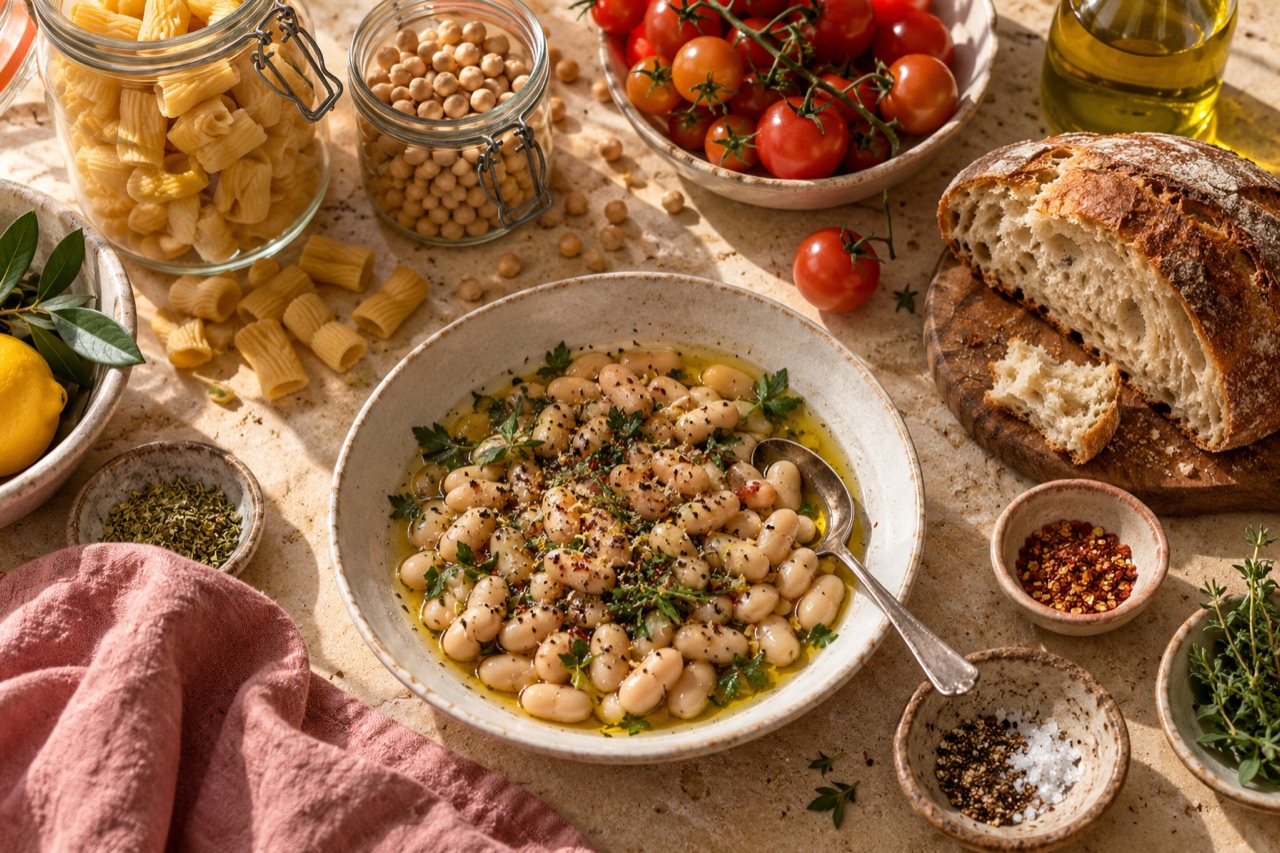
- Two starches: one pasta shape and one grain you enjoy cooking, such as rice or couscous.
- Two canned proteins: chickpeas and white beans are flexible options. Choose alternatives that fit your preferences and dietary needs.
- A sauce base: canned tomatoes or passata, plus a small jar of tomato paste if you use it regularly.
- Cooking essentials: olive oil or another cooking oil, salt and black pepper.
- A little character: one dried herb, one spice blend and a vinegar you like.
- A finishing ingredient: nuts, seeds or an unopened jar of olives. Check labels for allergens.
Add a small fresh-food bridge
Shelf-stable ingredients become more appealing with something fresh alongside them. Choose one sturdy vegetable, one quick salad ingredient and one bright finish when you shop. For example, carrots, cucumber and a lemon can take several pantry meals in different directions.
A bag of frozen vegetables is useful too. Use the package cooking instructions and add the vegetables where their texture makes sense: peas in pasta, spinach in a sauce, or broccoli beside a bowl of grains.
Five dinners from the same building blocks
These are meal formulas rather than timed recipes. Use the cooking directions on your pasta, grain and vegetable packages, then adjust the final seasoning to taste.
- Tomato-bean pasta: combine cooked pasta with a tomato sauce and drained beans. Finish with olive oil and black pepper.
- Chickpea grain bowls: layer cooked grains, chickpeas and prepared vegetables. Add an olive-oil-and-vinegar dressing.
- White beans on toast: warm beans with tomatoes, spoon over toast and add herbs. Use a sturdy slice of bread.
- Warm vegetable pasta: toss cooked pasta with cooked vegetables, oil and a splash of pasta water. Finish with seeds or cheese if you use it.
- A pantry lunch plate: arrange beans, bread, olives and fresh vegetables separately. Dress the beans so the meal feels intentional rather than unfinished.
Shop for connections, not a perfect cupboard
If a recipe needs several new condiments, look for another meal that uses them before buying. That little connection turns a one-off purchase into a useful staple. If you dislike an ingredient, leave it off the list even if it appears in every pantry guide.
When choosing brands, compare the unit price as well as the pack price. A larger pack is only useful if you have room for it and expect to use it. There is no universal best budget without knowing your local prices and habits.
Make your own five-meal shortlist
Write down five dinners that share ingredients and sound good to you. Keep the list in your phone, alongside the ingredients you are out of. On a busy evening, choosing from five familiar possibilities is easier than starting from an empty search box.
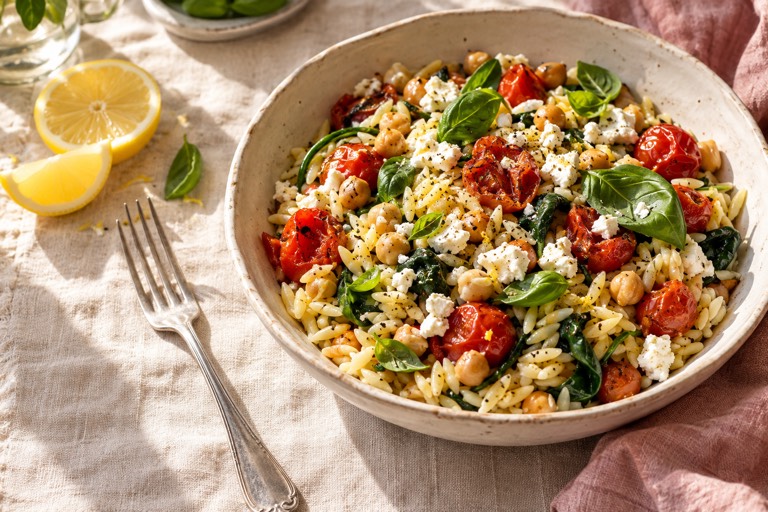
For a bright meal built from pantry staples, try lemon orzo with chickpeas. Our side-dish guide shows how to add freshness without turning dinner into a project.
Looking for ingredient quantities and cooking steps? Explore our recipes. Read our editorial approach.